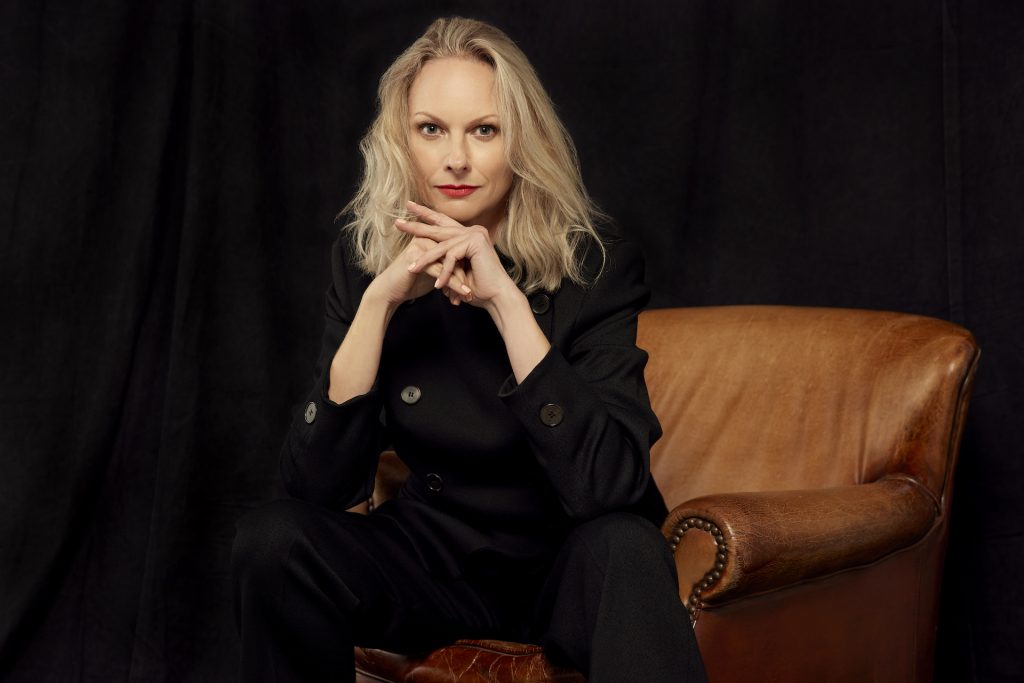

“He called the UN ‘The Halls of the Great’ – and it’s massive. My mum brought me to have lunch with him one day, and I remember watching with fascination at all these men striding through the halls. Some had no swing to their arms, some had huge swings. And then I went into my dad’s office and he had a desk, papers, pencils, erasers and a typewriter. I thought it was so cool. The idea of having papers to organise and put away was so exciting to me,” she laughs. “I loved that idea; of being in business. That moment really stayed with me.”
By the time she was in high school, Brown had realised she also loved the people side of business. She studied psychology with the idea that she’d go from psychology to business. The only other thing she knew for sure, no matter where she worked, was she wanted to be in charge.
Like what you’re reading? SIGN UP to The Suite – it’s the modern mini-magazine for women in leadership.
“It might sound a little bossy, but I always knew, from the time I graduated from college to getting my first job, I wanted to be in charge, and I actually rose very rapidly through the ranks when I started working,” Brown explains. “I was running a company by the time I was 30 years old. This company went from US$100 million in revenue, to $10 million in revenue, and I was responsible for ‘pulling the phoenix from the ashes’, so to speak.
“It was in the IT space – so, servers, networks, database, cloud – all these things I literally knew nothing about. It’s crazy thinking that a 30-year-old, who wasn’t technical, was running this deeply technical company. And it was in a field where virtually all the people who delivered on that company’s promises, products and services were men. Yet, despite all of that, there was a part of me that knew I could do it.”

Brown puts this kind of confidence down to her upbringing, and parents who instilled in her a sense that she could do anything she wanted to. “I lived a very bohemian existence that created a sense of limitless for myself,” she explains. “My father was never an emotional person. He doesn’t cry, nurture, support or comfort. But he always had these wise moments of reflection and would put things into perspective.”
“My mum was the opposite – the most emotive person ever. She was also one of the first women to live off-campus at the University of Pennsylvania, and one of the first women to receive a Thouron scholarship to go to Oxford University. She never doubted she could make it either.”
Understanding Her ‘Place’ As A Woman in Business
That’s not to say Brown doesn’t have self-doubt – “I have a tremendous amount of it,” she admits candidly. These doubts, and her Imposter Syndrome, came to the fore in 2001 when she began to have a real understanding of her ‘place’ as a woman in business.
“Being a woman had never gotten in my way until I was about 30. Then I started to realise there were limits and it really, really frustrated me. When the company started imploding, I was the one laying everybody off, and I got a lot of backlash online. There was even this rumour that the only reason I was at the top was because I was having the love child of the CEO, which was ridiculous. I was being bashed just for being a woman,” she reveals.
“Then in 2005, so this is four years later, I realised I had been building the business to move up the food chain. I wasn’t just dealing with men at the technical line management level, but the Director, Senior Director, VP and CIO. I was walking into bigger rooms, with bigger egos and bigger criticisms. That became increasingly difficult for me because of Impostor Syndrome. I’d legitimately need to ask a question, but no matter what question I asked, it was going to be dumb because I wasn’t technical, I looked young, and I was a woman.”
Brown decided to surround herself with female CIOs she could learn from. “I started a dinner group with these women, who were powerful then, and even more powerful now. From 2005 to 2012, I continued to build this group, which was all about education. It wasn’t about supporting anxieties, it was more, ‘Okay, so what are you doing in your data centre?’.”
Coco Brown Starts Something New
In 2012, Brown decided to step down from the company she had run for more than 10 years. At that point she knew she wanted to start something new, and she had built a strong ecosystem of women around her – she just had to figure out a solution that brought the two together. “I remember this group of women saying to me; ‘Whatever you do, don’t leave us behind. You’re trying to leave a lot behind, but don’t leave us.’ It was then that Athena Alliance was born.
“Athena isn’t about, ‘How can I rise? How can I be more ambitious?’ It’s, ‘How can we?’,” explains Brown. “It’s about surrounding ourselves with other successful women who don’t let us listen to that little imposter voice in our head. The more we do this, and the more vulnerable we are to say, ‘I don’t think I know what I’m doing’ and then they go, ‘Me either’, then the more you realise we’re all just figuring it out and we can share our knowledge with each other. When you have these kinds of reinforcing conversations, your shared experience creates a sense of safety to let your guard down. Only then can you ask the questions you need to ask without the filter of worrying if looking stupid.”
“Anyway, I keep telling people to embrace Impostor Syndrome because it’s really Impostor Reality until it’s not. David Bowie had this very famous quote; ‘Always go a little further into the water than you feel you’re capable of being in. Go a little bit out of your depth. And when you don’t feel that your feet are quite touching the bottom, you’re just about in the right place to do something exciting.’”
How To Make Business Work For Women
Brown’s work with Athena Alliance is clearly exhilarating to her, while her mission is crystal clear: “I want the world of business to work differently. I want it to work for women,” she says definitively. But how does she see this happening?
The first step – women have to help other women. “We must realise we already have the power. Our power comes when we operate in a digital world. Our power doesn’t come by having small support groups that make us feel good. It comes when we’re in a mass group in a digital sense. When we are doing favours for women we don’t necessarily know, simply because we know she’s been overlooked. We know she needs that chance. We need to change our scarcity mindset, which is what women operate in, to an abundance mindset and take risks on each other. We don’t take risks on other women, but we must. That’s one.”
Secondly, there are structures in the work world that need to be challenged. “When it comes to boards, for example, the accepted norm is that your board seat is for life,” explains Brown. “It’s the place that you go to sail into the sunset, sharing your wisdom into older age. Until we accept that boards need a totally new structure for the modern age, which says, ‘by the way, you have to turn them over faster because things change too quickly’, then you’ll open up space for women.”
“The third thing that is crucial is finding a way to fund women,” says Brown adamantly. “Women start over 50% of businesses but if they don’t get the funding that allows them to scale, they will always be lifestyle businesses. But here’s the thing: women have a tremendous amount of money now – we don’t need men to solve this problem. We don’t need to ask for permission either.”
More Money, More Risks
“What I’m seeing with women in venture though is they’re over-exercising the decision-making process. Women give very small amounts of money and they take a long time to decide – they don’t write cheques the way guys do. We need to just go for it. While we’re so proud of ourselves for not taking irresponsible risks, those irresponsible risks are what make the world go round! We’ve got to start saying, ‘Let’s go throw some money at this wild-ass tampon idea!’.”
Only then, believes Brown, will real change happen. “I think change is like a snowball. It’s tiny initially, and it looks so small, for so long, until it gets enough mass that every time it turns, it gets notably, visibly bigger. Now, there is a very serious risk that if we don’t keep that snowball moving, then it’s going to take a long time. However, there’s also a very significant possibility that if we do the few things that keep that snowball going, we will change that path.”
We’ve got to keep pushing the momentum, Brown insists, if for no other reason than for future generations. “I see young women now – my daughter is 17, my son’s girlfriend is 20, and my chief of staff is 22, and she’s brilliant – they’re more aware, particularly in certain aspects of the world like financial services and venture capital, that it’s still a guy’s game. But there’s also so much information available to them that they’re no longer sitting back and letting the world operate the way it does. They will take hold, and as long as we keep paving the way for them, the snowball will keep getting bigger.”
Like what you’ve read and want to read more? We recommend our exclusive interview with Flybuys CEO, Anna Lee. She talks about collaboration, chances and, well, hermit crabs. You can read it HERE.